
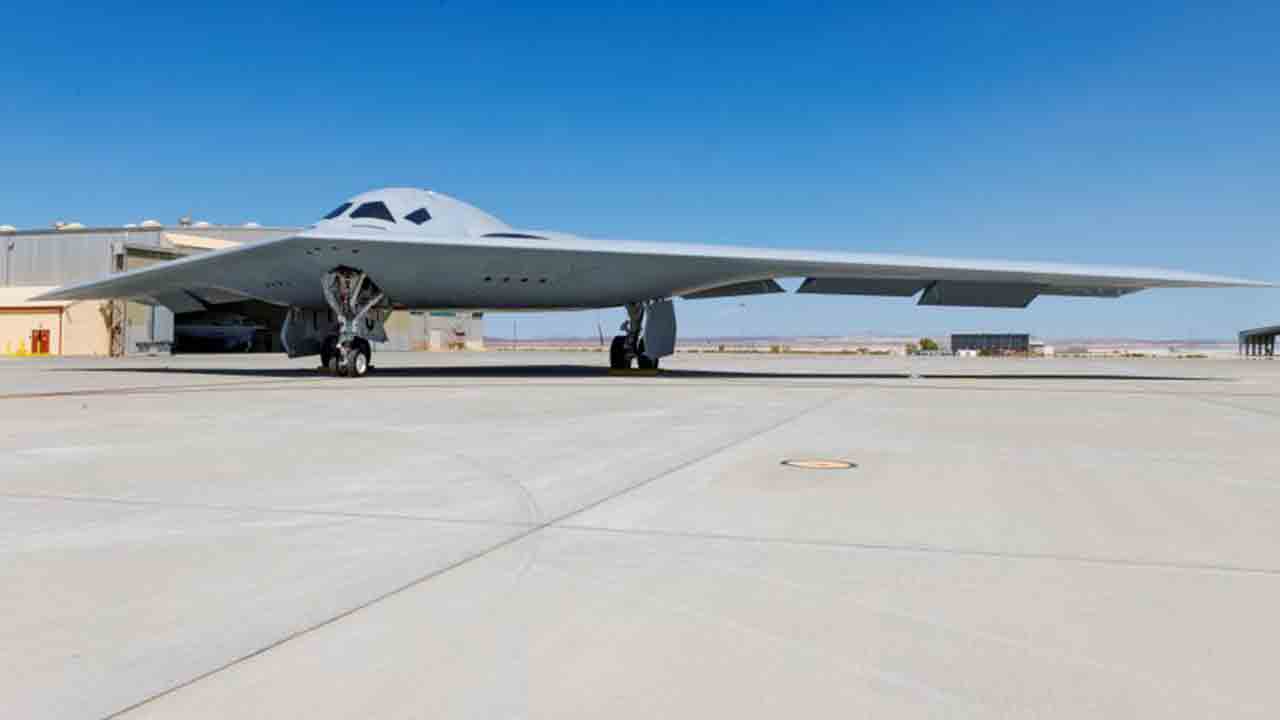
10 facts that show why the B-21 Raider could be the most advanced bomber ever built
The United States is placing a major bet on its new sixth-generation strategic bomber developed by Northrop Grumman. The B-21 Raider is not just a successor to the B-2 — it represents a structural shift in how strategic aviation will be designed, produced, and operated over the coming decades.
Below are 10 key points explaining why the program is considered a game changer in global deterrence.
+ Kalashnikov plans historic expansion of civilian firearms production in 2026
1) Sixth-generation stealth
The B-21 incorporates low-observability technologies built on decades of operational experience. Its design was conceived to penetrate highly sophisticated air defense systems and operate in contested environments.
In addition, the company states that modernized stealth processes make maintenance simpler and less costly than on previous platforms, helping keep the fleet mission-ready for critical operations.
2) Global strategic deterrence
Designed to hold any target at risk, anywhere in the world, the B-21 can carry both conventional and nuclear munitions, providing flexible and survivable options across different conflict scenarios.
Its open architecture was developed to allow continuous upgrades, ensuring mission systems and weapons evolve alongside emerging threats.
3) Mission partnership with the Air Force
The development of the B-21 is described as the result of a results-driven collaboration between Northrop Grumman and the U.S. Air Force.
A key highlight is what the company calls an industry-first agreement that includes shared access to valuable data, including the “digital twin”, potentially increasing upgrade agility and contributing to cost reduction.
4) Multi-billion-dollar investment in technology
Northrop Grumman says it has already invested more than $5 billion in the program’s digital and manufacturing infrastructure.
- 50% reduction in software certification time
- Integrated digital ecosystem for engineering and production
- Real-time performance validation during testing
5) Tests exceeding expectations
Multiple B-21 aircraft are currently undergoing flight testing, demonstrating performance that the company claims is surpassing digital modeling predictions.
At the same time, engineers are conducting ground tests to ensure operations under extreme conditions, reinforcing confidence in the design.
6) Advanced manufacturing with digital tools and augmented reality
The company highlights advanced manufacturing processes that use digital tools and augmented reality, allowing technicians to visualize tasks and solve issues before physically interacting with the aircraft.
This approach brings production closer to engineering, improving efficiency and helping accelerate industrial scaling of the program.
7) More than a bomber
The B-21 is described as part of a broader family of systems. The concept is to integrate data, sensors, and weapons to enable precision strikes while enhancing situational awareness.
8) Ready from day one
Northrop Grumman states it is developing comprehensive training, sustainment, and fleet management tools using test data and lessons learned from previous programs.
The goal is for the B-21 to enter service fully mission-capable, sustainable, and cost-controlled at scale.
9) “Made in the USA” deterrence
The program involves more than 8,000 professionals from industry and the U.S. Air Force.
According to the company, over 400 suppliers across 40 states are participating, forming a nationwide industrial effort.
10) A name with historic weight
The name “Raider” honors the Doolittle Raid of World War II, when 80 aviators led by Lieutenant Colonel James “Jimmy” Doolittle carried out a decisive mission using 16 B-25 medium bombers.
The tribute symbolizes boldness, innovation, and pioneering spirit — elements the company says are embedded in the B-21 program.
Source and images: Northrop Grumman
